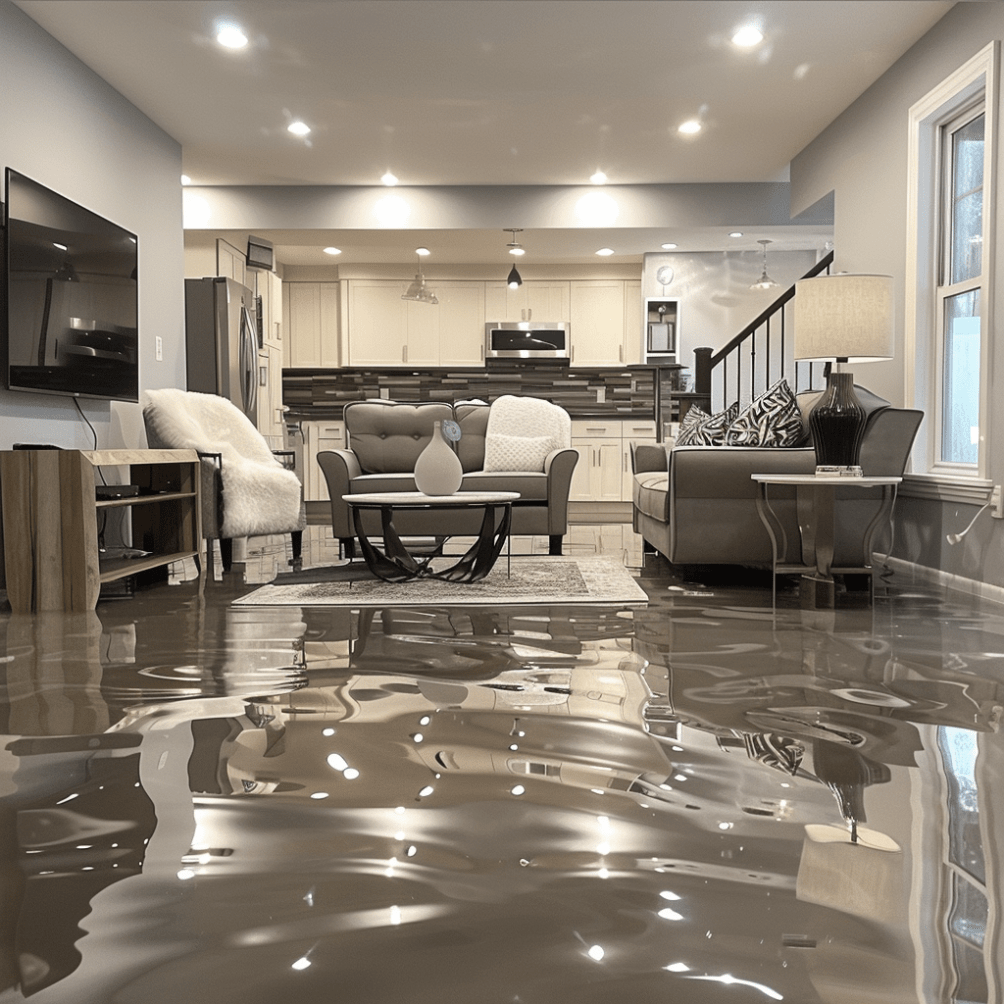
April showers are notorious for bringing beautiful May flowers, but they can also bring unexpected storms and water damage to your home. When the rain starts pouring, understanding what type of flooring you have can make a significant difference in how you handle any resulting water damage.
Being Prepared for Water Damage
Whether you have luxury vinyl, laminate, or carpet, each type of flooring reacts differently to water exposure. Knowing the specifics of your flooring can help you make informed decisions if faced with water damage.
Key Facts About Water Damage on Different Floor Types
Luxury Vinyl Plank (LVP):
Survivability: Can withstand water exposure for up to 48 hours with minimal damage, provided it is dried promptly.
Recommendation: Act quickly to dry the area and reduce long-term damage.
Laminate Flooring:
Survivability: Faces significant risk of damage within 24 hours, often becoming unsalvageable.
Recommendation: Due to its composition, laminate is particularly vulnerable to water, and quick action is essential, though replacement is frequently necessary.
Carpet:
Survivability: Can suffer damage within 24-48 hours, with mold growth being a primary concern.
Recommendation: Address water damage swiftly to prevent mold. Professional cleaning may save the carpet if dealt with promptly, but prolonged exposure often requires replacement.
Why You Shouldn’t Reuse Submerged Flooring
If your flooring has been submerged for any amount of time, you might be tempted to reuse it once it dries out. However, this can be a risky move. Water can compromise the structural integrity and safety of your flooring in ways that are not immediately visible. Here’s a closer look at why each type of flooring might need replacement after significant water exposure:
LVP: While it can handle short-term exposure, prolonged submersion can still lead to hidden damage that may not be apparent until much later.
Laminate: Its core materials swell and deteriorate quickly when wet, making it prone to warping and delamination.
Carpet: Besides structural damage, wet carpet is a breeding ground for mold and bacteria, which can pose health risks.
Keep In Mind
Preparation and prompt action are key when dealing with water damage. Understanding the vulnerabilities of your flooring can help you make the best decisions to protect your home and ensure a safe, clean living environment. Remember, while April showers may bring May flowers, being ready for the storms they bring can save you from costly repairs down the line.
 A Creative Flo Interiors
Leave a comment